Nobel laureates among the jury and experts
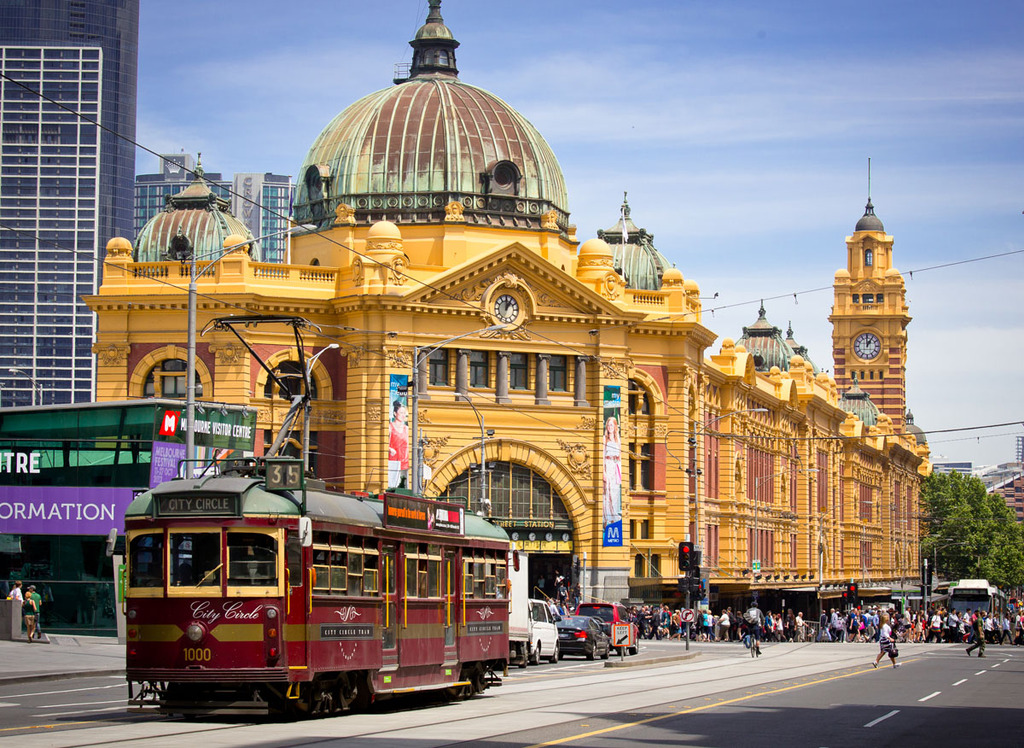
Melbourne, Australia 15.11.26 - 25.11.26
For physicists, mathematicians, artists, art critics, psychologists, athletes, doctors, biologists,
chemists, economists, philologists, linguists, lawyers, historians, political scientists, international affairs specialists, geographers, philosophers, public administration professionals as well as professionals in technical, sports, natural and pedagogical sciences.
The World Championships in Science, Education, Technology and Art are among the scientific events, participation in which allows your higher education institution to be included in international rankings and enter the international scientific and educational space!
What you will receive
Lifetime title and status of World Champion
Visa for talents from any country in the world
Solid award for winners from their country and university
Prestige, authority and further career growth
Popularization of the international prestige of the country and university
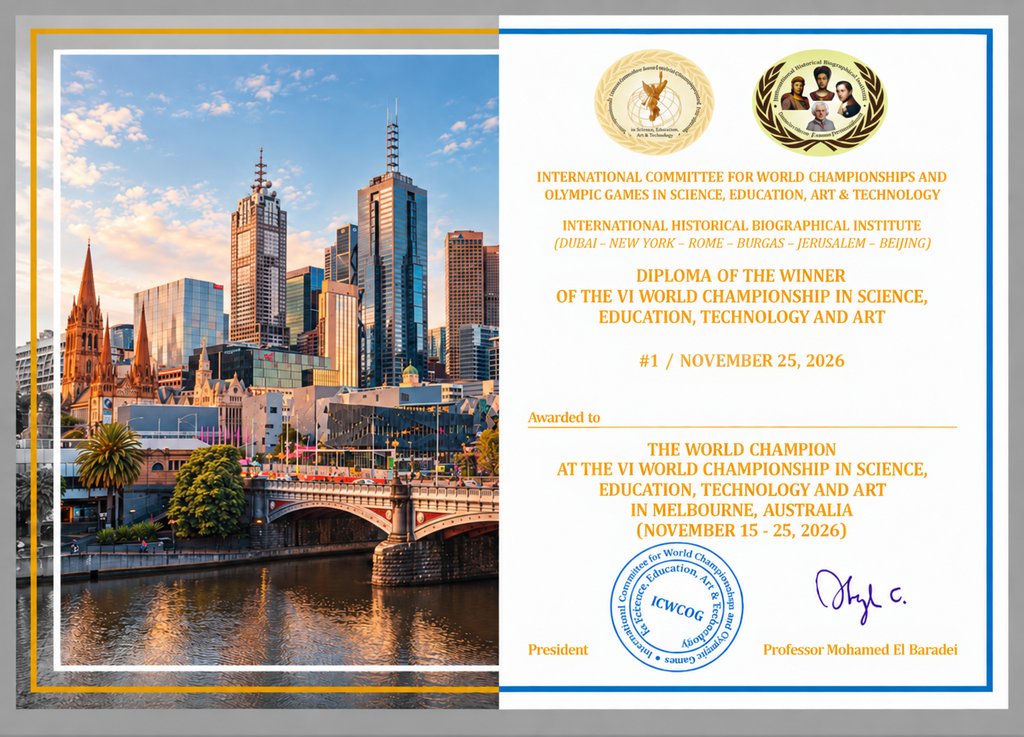
VI WORLD CHAMPIONSHIP IN SCIENCE, EDUCATION, TECHNOLOGY AND ART IN MELBOURNE, AUSTRALIA (NOVEMBER 15 - 25, 2026)
Results - International Committee for World Championships and Olympic Games
Nobel laureates among the jury and experts
For physicists, mathematicians, artists, art critics, psychologists, athletes, doctors, biologists, chemists, economists, philologists, linguists, lawyers, historians, political scientists, international affairs specialists, geographers, philosophers, public administration professionals as well as professionals in technical, sports, natural and pedagogical sciences.
The World Championships in Science, Education, Technology and Art are among the scientific events, participation in which allows your higher education institution to be included in international rankings and enter the international scientific and educational space!
The International Historical Biographical Institute (Dubai – New York – Rome – Burgas – Jerusalem – Beijing) (IHBI) and The International Committee for World Championships and Olympic Games in Science, Education, Art & Technology invite the heads of educational institutions and scientific institutes as well as scientific employees and research and pedagogical workers to take part in the VI WORLD CHAMPIONSHIP IN SCIENCE, EDUCATION, TECHNOLOGY AND ART IN MELBOURNE (NOVEMBER 15 - 25, 2026). The programme is funded by an international grant equivalent to EUR 1 200 000 provided to the IHBI with financial support from the UAE, Italy, Bulgaria, the USA, Israel and China, and with the involvement of charitable contributions.
You should submit your research articles in any of the research fields according to the form as a single author or a co-author in English, Ukrainian, Russian, Polish, Spanish, German or Turkish. The international expert commission consisting of influential scientists will evaluate them according to the grading system and define the winners according to the branches of science.
To participate in the VI WORLD CHAMPIONSHIP IN SCIENCE, EDUCATION, TECHNOLOGY AND ART IN MELBOURNE (NOVEMBER 15 - 25, 2026), you can also provide:
• PDF – versions of your works in the field of science (scientific monographs, articles);
• a portfolio of your works in the field of art (painting, graphics, sculpture, digital art, etc.) in a free format;
• PDF – versions of your works in the field of literature;
• PDF – versions of your works in the field of education (textbooks, manuals, didactic and methodological materials, articles, as well as creative developments of lessons for teachers);
• Description of new technologies and photos, drawings of useful models and inventions in free form.
Registration and submission of your works to:
VI WORLD CHAMPIONSHIP IN SCIENCE, EDUCATION, TECHNOLOGY AND ART IN MELBOURNE (NOVEMBER 15 - 25, 2026). Submission of works until NOVEMBER 15, 2026 inclusive.
Awarding of winners until DECEMBER 10, 2026.
Branch of science or scientific field: International scientific competitions include an opportunity of submit an article in any branch of science or scientific field.
Form of participation: remote.
Why Should You Participate in the VI WORLD CHAMPIONSHIP IN SCIENCE, EDUCATION, TECHNOLOGY AND ART IN MELBOURNE (NOVEMBER 15 - 25, 2026)?
Costs for research and pedagogical workers to participate in the International scientific competitions are 100 EUR of registration fee.
Registration: You can register to participate in the International scientific competitions till NOVEMBER 15, 2026; register via official email of the Committee: contact@icwcog.org
Follow these simple steps to register:
RULES
1. International scientific competitions begin and end on the above dates.
2. On the above dates, the results are announced and the winners are awarded.
3. Scholars and teachers from different countries take part in the International scientific competitions. The competitions may take place both remotely and onsite.
4. Each of them submits an application and undergoes the registration.
5. Before the International scientific competitions begin, the participants submit their research articles to the IHBI. It is allowed to submit both previously published research articles in the scientific publications and freshly-written articles.
To participate in the IV WORLD CHAMPIONSHIP IN SCIENCE, EDUCATION, TECHNOLOGY AND ART IN DUBAI (MAY 15 - 25, 2026), you can also provide:
• PDF – versions of your works in the field of science (scientific monographs, articles);
• a portfolio of your works in the field of art (painting, graphics, sculpture, digital art, etc.) in a free format;
• PDF – versions of your works in the field of literature;
• PDF – versions of your works in the field of education (textbooks, manuals, didactic and methodological materials, articles, as well as creative developments of lessons for teachers);
• Description of new technologies and photos, drawings of useful models and inventions in free form.
6. The articles can be written both by a single author and in co-authorship of 5 authors. Then authors register for participation in a team contest. In a team contest, it is necessary for all authors to represent one country and preferably one institution.
7. Expert judges evaluate articles by grading them and define the winners in each branch of science (1st, 2nd, 3rd place). The criteria for evaluating the articles include scientific significance and novelty as well as the validity of the obtained results.
Calculation of rating points of the tournament table for the participants of the Championship.
1st place - from 300 rating points.
2nd place - from 200 rating points.
3rd place - from 100 rating points.
8. With the help of GLOBES technologies and use of artificial intelligence in the process and after the end of the competition the results will be calculated and the winners of the International scientific results in various branches of science will be announced.
9. In case plagiarism is detected or programs like SCIgen are used, the participant’s rating as well as the correspondent rating of their university become zero and they are disqualified.
10. A quite controversial notion of participant’s ‘self-plagiarism’ is not considered as plagiarism.
11. The results of the scientific competitions will be used for the international university rankings.
12. The research articles will be published and placed in international scientometric databases, in particular, Web of Science and Scopus.
Requirements for the research articles
Such information should be given on the title page in Word format
Language
You can submit your manuscript as a single file as a Word document. Preferable fonts: Arial or Times New Roman. 12-point font. 1.5 line spacing.
Research articles are accepted in English, German, Spanish, Turkish, Polish, Bulgarian, Russian and Ukrainian.
The length of a research article
The median length of a research article is up to 5000 words, but research articles longer than 5000 words will be accepted in case the subject of a research article requires such a length.
References
In the submission process of research articles, there are no strict requirements for references. Any style and format of references is possible on the condition that coherence is ensured. The name/names of the author(s), titles of journals/books, titles of sections/articles, year of publication, volume/book number, sections and pages must be indicated. Including a DOI is preferable if available.
Formatting requirements
There are no strict requirements for formatting but all the research articles must contain essential elements necessary for their processing, e.g. abstract, key words, introductions, techniques and methods, results, conclusions, graphic design and tables with signatures.
Page numbering
Please, make sure that pages of your research article are consecutively numbered.
Electronic graphic design
Title of a research article
Brief and informative. Avoid using formulas and abbreviations if possible.
Abstract
Brief and factual abstract is required. It must include a short summary of goals of a research, main results and conclusions.
Key words
We kindly ask you to indicate no more than six key words.
GALLERY